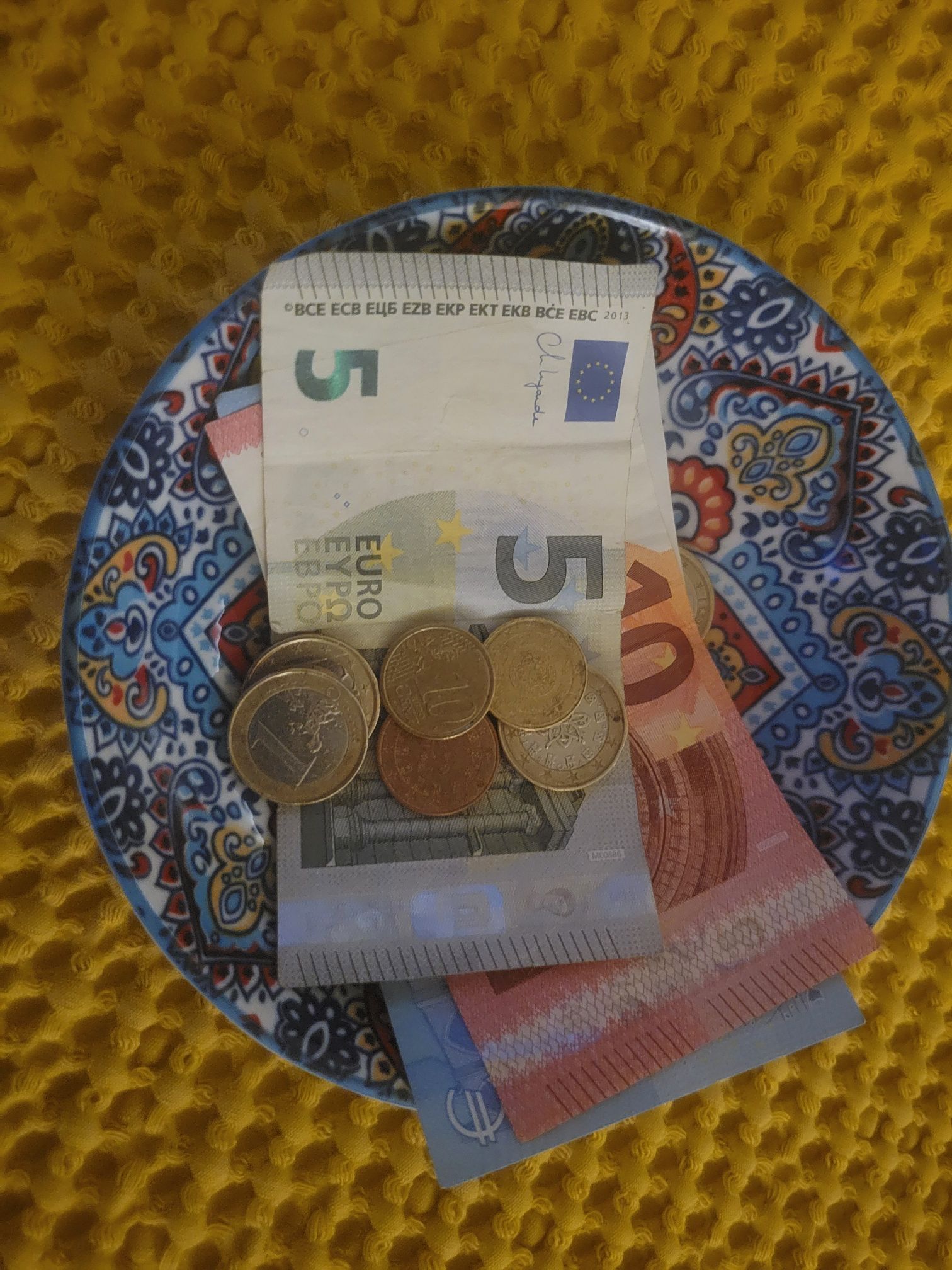
The salon owner tapped his index finger emphatically on the price list by the door. A reminder. A warning.
“A haircut is 15,” he said.
I had paid him 35 euros with our bank’s mobile app, five euros more than the 30-euro charge for Ted’s and my haircuts. To my surprise, the light in the fellow’s hazel eyes registered impatience rather than thanks for the tip.
Why do you Americans feel the need to do this? He didn’t say it, but the question hovered between us, thick as the salon’s perennial scent of hot drying hair.
In the Portugal guidebooks, Ted and I had read the cautions about tipping. It’s not expected here … in bars, restaurants, hair salons … though we hadn’t seen its opposition so vividly displayed until our haircuts the other day.
Now, I get it.
The salon owner helped me see the light.
Let’s face it, as newcomers from the U.S., a country whose recent behavior baffles the rest of the world, we must proceed carefully on foreign turf. Does tipping show goodwill or an attempt to impress? To curry favor? Is there a suggestion of charity bestowed from the largest economy in the world, or worse, an implication of ownership? After all, don’t the orange monster’s threats to buy Greenland and Canada demonstrate in the crassest of terms the belief that everything, and everyone, is for sale?
Bless his heart, he doesn’t know any better.
Thankfully, we do.
As we begin our fifth month of life in Porto, we understand that the salon owner doesn’t want our financial gifts.
He simply wants to get paid a fair price for a job well done, one human being to another.
And that’s not all. I believe my five-euro tip touched a deeper nerve with the owner.
Porto has been known throughout history as a working-class, industrial city–hard-working, unpretentious, distinctive from its artsier neighbor Lisbon to the south.
And now that the city is flooded with tourists and expats, touted as one of Europe’s top travel destinations, the locals fear their secret is out. Porto is a wonderful, egalitarian place … and they don’t want to lose it. They don’t want the rising costs that visitors with higher salaries and substantial IRAs from across the pond tend to stimulate. And they don’t want foreigners building a culture where the best service goes to the biggest tipper.
Porto wants to remain its laid-back, rough-hewn self.
And we respect that. Sure, at the cash register, some cafes have tip jars that I will continue to drop loose change in. A few of the higher-end restaurants do include a choice for a small tip on their tableside charge-card devices. And it’s customary to give a little extra to tour guides if they’ve provided an exceptional experience.
Uber rides, too, are so inexpensive that adding a five percent tip will certainly not break the bank. Here’s another blogger who gives some good advice on the subject.
Still, the next time we go for haircuts, we’ll keep a tight grip on our wallets. And we’ll be extra careful to convey our appreciation for all things Portuguese.
Sounds like a win-win to me.
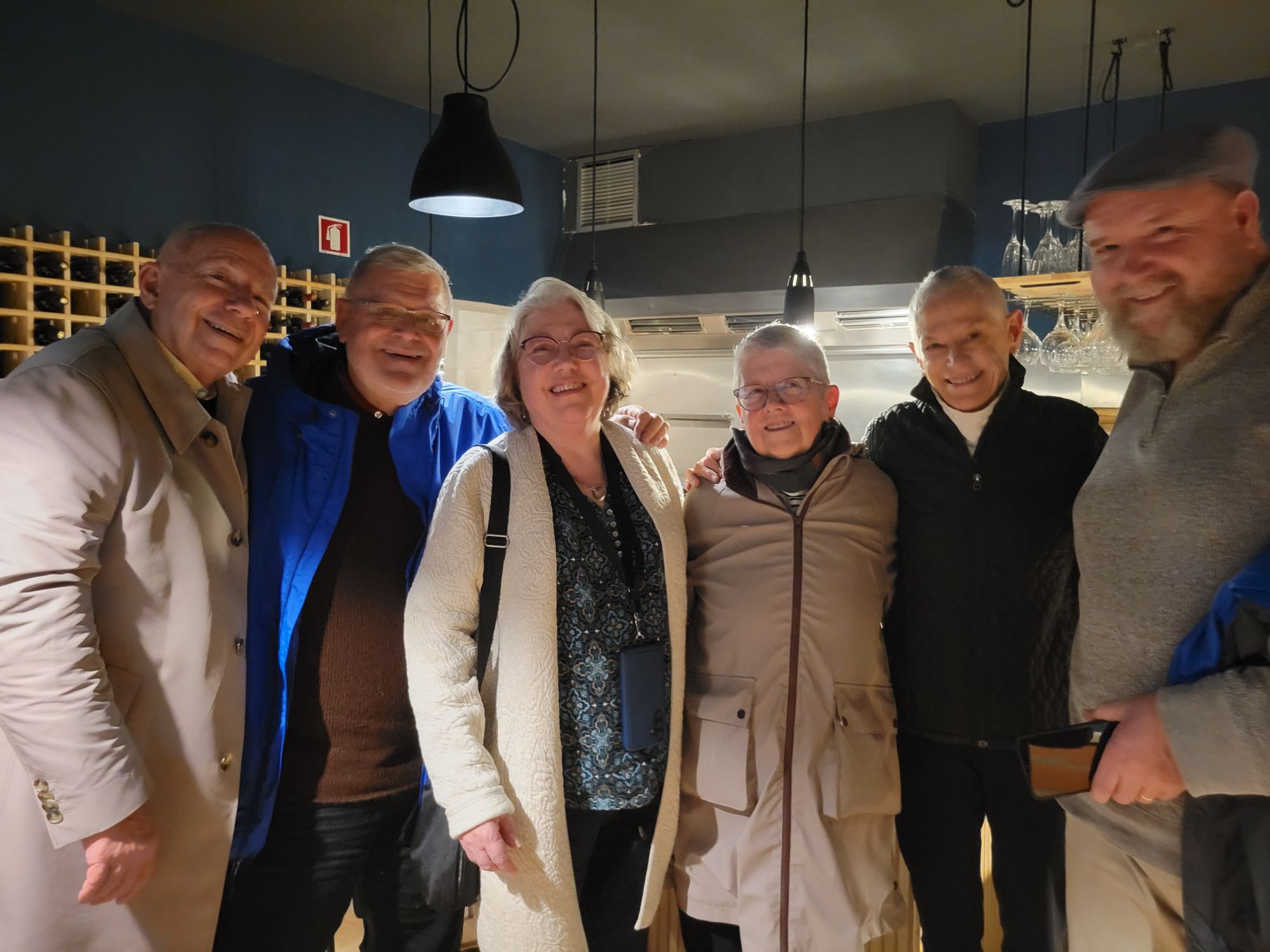
A recent night out sharing a delicious meal with friends at a low-cost neighborhood restaurant … where tips are not on the menu.
Note: The Portuguese language includes many false cognates, words that sound like they mean something else in another language. For example, “puxe” means pull, not push. “Embaraçada” in Portuguese means embarrassed, but “embarazada” means pregnant in Spanish. My current favorite is “educado.” It means polite in Portuguese, not educated, although in many cases, as in our experience at the salon, isn’t education essential to good manners? I love that connection!
 Mike Coleman
Thoroughly enjoyed your ruiminations on Portugese gratuiyties!
Martin Martin C. Lehfeldt
LikeLiked by 1 person
Thank you, Martin! I enjoy your ruminations, too! We’re enjoying life in Porto, but our Central friends are always on our minds. Best wishes from both of us.
LikeLike